Sacred Kaya Tree - ARCHIVE No.002 –
椿八幡神社 御神木・榧の木 (大分県国東)
この地には、千年近く受け継がれてきた祈りがあります。
大分県国東に鎮座する、椿八幡神社。
宇佐神宮の流れを汲み、古くから地域の人々の心の拠り所として守られてきた神社です。
幾度もの災禍を乗り越えながら、人々は祈りを絶やすことなく、この場所を受け継いできました。
境内には、今も大きく枝葉を広げる楠の木が立っています。
古くから神が宿る木として大切にされてきた楠。その雄大な姿は、長きにわたり地域の人々を見守り、この土地の歴史と祈りを今に伝えています。
そして、本殿の傍らには、もう一本の御神木がありました。
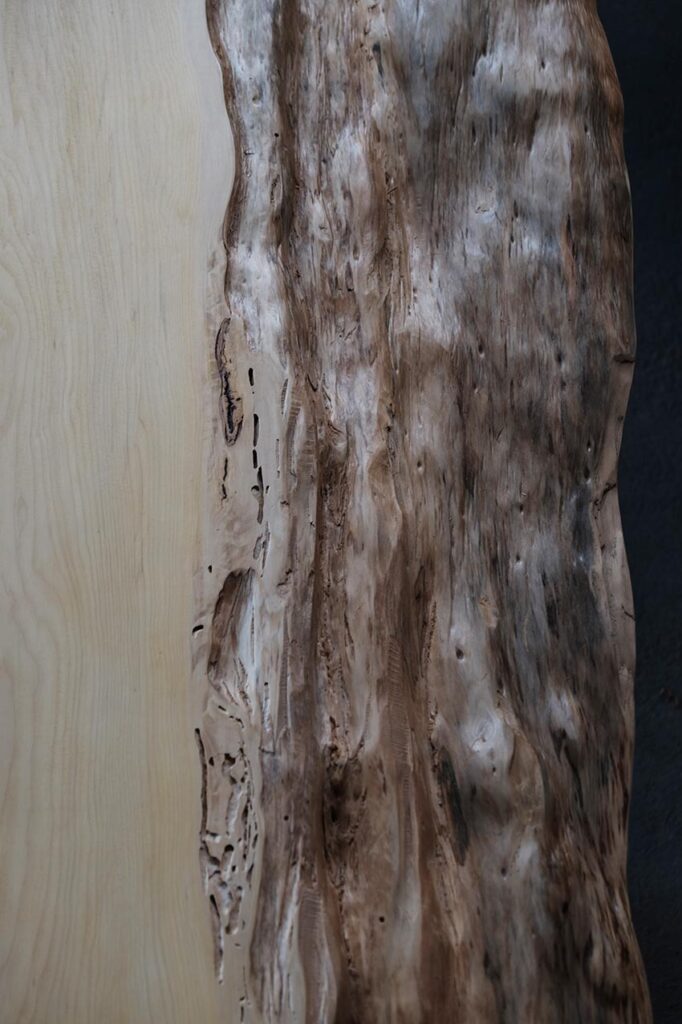
樹齢五百年を超える、榧(かや)の木
榧は、日本の温暖な山地に自生する常緑樹です。成長が極めて遅く、豊かな水に恵まれた限られた環境で育つことから、自然の中でその姿に出会うことは決して多くありません。
九州は古くから榧の生育に適した環境に恵まれ、今も各地に大きな榧の木が残されています。
この榧の木もまた、神々が祀られる本殿の傍らで、御神木として大切に守り継がれてきました。
地域の人々の祈りを受け止めながら、五百年という長い歳月を生き、その土地の風景とともに時を刻んできた一本の木。
榧は、緻密で美しい木質を持ち、古くから仏像をはじめ、神仏に関わる工藝にも用いられてきました。
五百年という歳月を宿した木
そこに刻まれた時間や記憶、そして人々の祈り。
GO-OUは、この榧の木が歩んできた物語を大切に受け継ぎ、新たなかたちへとつないでいきます。
木は姿を変えても、その時間まで失われるわけではありません。
一本の木から、次の森へ
The Story of a 500-Year-Old Tree
Tsubaki Hachiman Shrine|Kunisaki, Oita, Japan
For nearly a thousand years, prayers have been passed down through generations in this place.
Tsubaki Hachiman Shrine, located in Kunisaki, Oita, is rooted in the tradition of Usa Jingu. For centuries, it has been a place of spiritual refuge for the local community.
Through times of hardship and repeated disasters, people have continued to offer their prayers, preserving this sacred place for generations to come.
Within the shrine grounds stands a magnificent camphor tree, its branches spreading wide above the land.
Since ancient times, camphor trees have been revered in Japan as trees in which deities are believed to dwell. Found at many Shinto shrines throughout the country, their majestic presence has watched over local communities for generations.
The camphor tree at Tsubaki Hachiman Shrine is also a living testament to the history and prayers of this land.
And beside the main sanctuary stood another sacred tree.
A Kaya tree, believed to be more than 500 years old.
Kaya (Torreya nucifera) is an evergreen tree native to the warm mountainous regions of Japan.
It grows exceptionally slowly and thrives only in certain environments blessed with abundant water. For this reason, it is not often encountered in the wild.
Kyushu has long provided favorable conditions for Kaya trees to grow, and some of Japan’s largest and most remarkable specimens can still be found in this region.
This rare tree stood beside the main sanctuary, where it had been carefully protected and revered as a sacred tree.
For more than five centuries, it had stood alongside the prayers of the local people, quietly witnessing the passage of generations.
Known for its fine, beautiful grain and dense wood, Kaya has long been valued in Japan. It has traditionally been used for Buddhist statues and various forms of craftsmanship associated with religious traditions.
A life that has carried more than five centuries of time.
Within this tree are memories of the land, the passage of time, and the prayers of generations.
At GO-OU, we seek to honor the story this Kaya tree has carried and pass it on in a new form.
Even as a tree takes on a new shape, the time and memories held within it do not disappear.
From one tree, toward the next forest.